
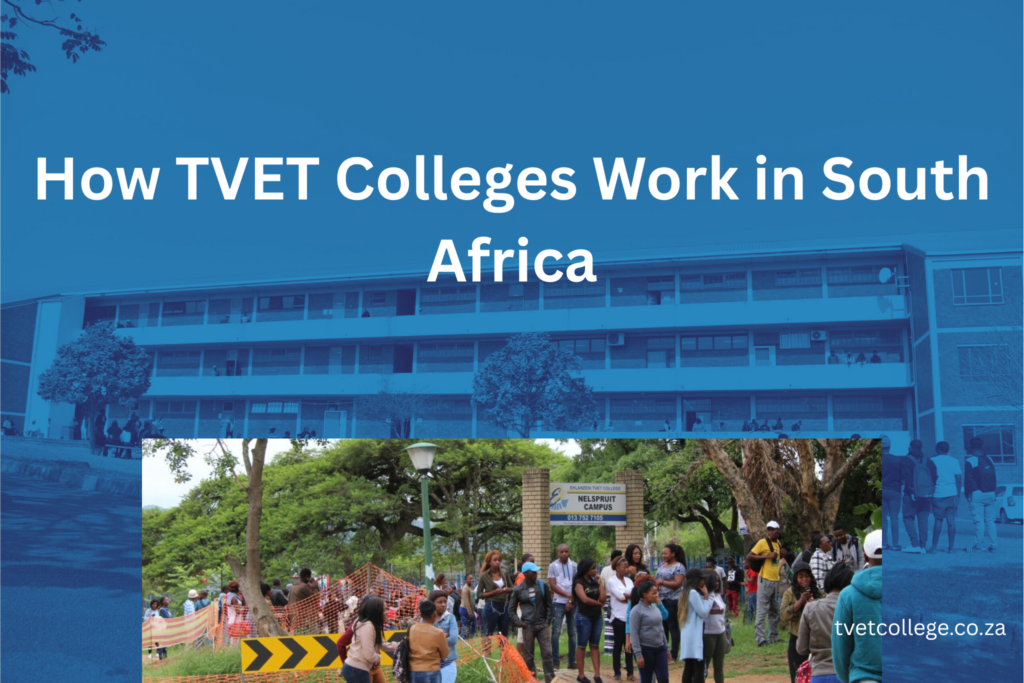
Understanding how TVET (Technical and Vocational Education and Training) colleges function operationally—from initial application through qualification completion and career entry—empowers prospective students, parents, career counselors, and adult learners to navigate technical education successfully. South Africa’s TVET system operates through integrated mechanisms combining classroom instruction, workplace learning, competency-based assessment, industry partnerships, and comprehensive student support, creating pathways from enrollment to employment. This detailed guide explains precisely how TVET colleges work, demystifying processes and empowering informed participation.
TVET College Operational Framework
Governance and Administration Structure
National Level Governance – Department of Higher Education and Training (DHET) establishes policy frameworks, allocates funding, sets quality standards, develops curricula, and provides strategic direction for entire TVET sector across all provinces.
Provincial Coordination – Provincial education departments coordinate regional TVET delivery, facilitate industry partnerships, support college operations, and ensure alignment with provincial economic development priorities and skills needs.
Institutional Management – Each of South Africa’s 50 public TVET colleges operates through:
- College Council – Governing body comprising government representatives, industry partners, labor representatives, and community stakeholders providing strategic oversight, approving policies, and ensuring accountability
- Principal/CEO – Chief executive officer managing overall college operations, academic delivery, financial management, human resources, and strategic planning
- Deputy Principals – Senior managers overseeing academic affairs, student services, finance, and administrative functions
- Campus Managers – Leaders managing individual campus operations, facilities, staff, and local stakeholder relationships
- Heads of Department – Academic leaders coordinating specific program areas (engineering, business, hospitality) ensuring quality delivery, lecturer support, and industry alignment
Academic Structures – Departments organized by program fields (Engineering Studies, Business Studies, Utility Studies, Services, Primary Agriculture) with qualified lecturers, workshop supervisors, and support staff delivering curriculum.
Administrative Support – Student services, admissions offices, finance departments, library services, IT support, and facilities management enable smooth operational functioning.
How the Application Process Works
Application Mechanisms
Online Application Systems – Most TVET colleges now operate digital application platforms:
- Account Creation – Prospective students register on college websites using email addresses and creating secure passwords
- Personal Information – Applicants provide full legal names, ID numbers, contact details, demographic information, and educational backgrounds
- Program Selection – Students choose up to three program preferences with campus location specifications
- Document Upload – Digital submission of certified ID copies, academic certificates, proof of residence, and photographs in specified formats (typically PDF)
- Application Fee Payment – Online payment via credit/debit card, EFT transfer, or cash deposit with proof uploaded
- Submission Confirmation – Automated email confirmation with application reference number, submission timestamp, and tracking information
Physical Application Process – Alternative walk-in applications at campus student services:
- Form Collection – Obtaining paper application forms from admissions offices
- Manual Completion – Handwritten form completion using black pen, printing legibly
- Document Attachment – Physical certified copies stapled to forms
- Fee Payment – Cash or card payment at finance offices with receipt retention
- Submission – Delivery to admissions office receiving stamped acknowledgment
- Reference Number – Manual recording of application reference for tracking
Application Review Process
Initial Screening (Week 1-2):
- Document verification checking certification validity, completeness, and authenticity
- Academic qualification verification ensuring minimum entry requirements met
- Identity confirmation preventing duplicate applications
- Payment verification ensuring fee processing
Admission Assessment (Week 2-4):
- Program availability confirmation at requested campuses
- Academic merit evaluation for competitive programs
- NSFAS status consideration for funding-dependent students
- Alternative program/campus identification if primary choices unavailable
Decision Communication (Week 4-8):
- Email notifications with admission outcomes
- Acceptance letters specifying program details, registration dates, and requirements
- Rejection notifications explaining reasons and appeal procedures
- Waitlist placements with position indication and movement potential
Acceptance Procedures (Week 5-9):
- Formal acceptance through online portals or signed forms
- Deadline adherence (typically 7-14 days) preventing offer forfeiture
- Registration appointment scheduling
- Preparatory information provision
How NSFAS Funding Works for TVET Students
NSFAS Application Process
Online Registration (October-November annually):
- Account Creation – Students register at mynsfas.gov.za using ID numbers, cellphone numbers, and email addresses
- Application Completion – Comprehensive personal, household, academic, and financial information provision
- Document Upload – Certified ID copy, academic records, household income documentation (payslips, pension statements, SASSA grant proof), and consent forms
- Verification Consent – Authorization for NSFAS verifying information with SARS (tax records), Home Affairs (ID validation), and credit bureaus
- Submission Confirmation – Application reference number receipt and status tracking capability
NSFAS Assessment Process
Stage 1: Means Test (Weeks 1-6):
- SARS income verification accessing household tax records
- SASSA grant confirmation checking social assistance receipt
- Combined household income calculation determining R350,000 threshold compliance
- Vulnerability assessment identifying orphans, persons with disabilities, or special circumstances
Stage 2: Academic Verification (Weeks 4-8):
- College registration confirmation ensuring NSFAS-approved institution enrollment
- Academic progress verification for continuing students (minimum 50% module pass rate required)
- Program eligibility confirmation ensuring qualification approval
Stage 3: Funding Allocation (Weeks 6-12):
- Budget availability assessment against annual NSFAS allocation
- Student category prioritization (first-time entrants, continuing students, vulnerable groups)
- Funding package calculation including tuition, materials, accommodation, and allowances
- Provisional approval or rejection notification
NSFAS Disbursement Mechanism
College Direct Payment:
- NSFAS transfers tuition fees directly to college finance offices
- Registration fees automatically paid enabling student enrollment
- Learning materials funding provided to colleges for textbook distribution or purchasing systems
Student Allowance Distribution:
- Accommodation Allowance – Monthly payments (typically R2,500-R3,500) for students living away from home, paid directly to student bank accounts or through college financial aid offices
- Personal Care Allowance – Monthly stipends (typically R2,500-R3,000) covering transport, food, personal expenses transferred to student accounts
- Travel Allowance – Distance-based calculation for daily commuting students
Disbursement Schedule:
- Initial disbursement upon registration confirmation (February/March)
- Monthly allowance payments throughout academic year
- Delayed payments common requiring budget management and emergency funding awareness
NSFAS Conditions and Requirements
Academic Progress Monitoring:
- Semester assessments tracking module passes
- Annual review requiring 50% pass rate minimum
- Intervention programs for at-risk students
- Funding termination for consistent non-performance
Attendance Requirements:
- Regular class attendance expectations (typically 80% minimum)
- Workplace learning participation requirements
- Assessment completion obligations
Conduct Expectations:
- Compliance with college codes of conduct
- No financial fraud or misrepresentation
- Honest information provision throughout funding period
How Academic Programs Function
NC(V) Programme Structure
Three-Level Progression:
Level 2 (Year 1):
- Fundamental subject introduction in chosen field
- Basic practical skills development
- Workplace exposure (typically 1-2 weeks)
- Foundation theory in mathematics, languages, and life orientation
- Semester-based assessment with June and November examinations
Level 3 (Year 2):
- Intermediate competency development
- Enhanced practical training
- Extended workplace learning (2-4 weeks)
- Progressive theoretical complexity
- Continued assessment and examinations
Level 4 (Year 3):
- Advanced technical competencies
- Substantial workplace learning component (6-8 weeks minimum)
- Preparation for employment or further study
- Final assessments and external examinations
- Qualification completion enabling graduation
Subject Structure – Each NC(V) level includes:
- Three vocational subjects specific to program field
- Mathematics or Mathematical Literacy
- Language (typically English)
- Life Orientation (personal development, career guidance, citizenship)
Assessment Methodology:
- Continuous assessment (tests, assignments, projects) contributing 40%
- Practical workplace assessment contributing 25%
- External examinations contributing 35%
- Integrated assessment combining theory and practice
Report 191 (Nated) Programme Structure
N1-N3 Foundation Phase:
- Theoretical subject emphasis (mathematics, science, engineering drawing/business subjects)
- Minimal workplace requirement at these levels
- Semester examinations (March/April and August/September)
- Progressive advancement requiring subject passes
N4-N6 Advanced Phase:
- Continuation of theoretical studies
- Parallel workplace experience requirement (18 months minimum for N6 diploma)
- Specialized subject focus
- Professional development preparation
Workplace Training Integration:
- Students secure workplace learning positions (employment or formal learnership)
- Logbook completion documenting workplace activities
- Supervisor verification of competencies
- Workplace assessment contributing to qualification
Diploma Completion:
- N4-N6 subject passes PLUS
- 18 months workplace experience (24 months for N6 diploma) PLUS
- Workplace logbook completion and verification
- Results in National N Diploma enabling professional registration
Skills Programmes and Short Courses
Duration: Typically 3-6 months intensive training
Structure:
- Focused competency development in specific skills
- Intensive practical training
- Industry certification preparation
- Minimal theoretical emphasis
- Rapid employment entry upon completion
Assessment: Competency-based evaluation through practical demonstrations, workplace assessment, and industry examinations where applicable.
How Workplace Learning Functions
Workplace Learning Purpose and Importance
Workplace learning represents mandatory TVET component integrating theoretical classroom instruction with actual work environment experience, enabling:
- Practical Skill Application – Converting theoretical knowledge into demonstrated workplace competencies
- Industry Exposure – Understanding workplace culture, professional expectations, and industry standards
- Employment Networking – Building relationships with potential employers, supervisors, and industry professionals
- Realistic Career Insight – Experiencing actual job demands, challenges, and opportunities
- Assessment Verification – Demonstrating competency in authentic work contexts under professional supervision
Workplace Learning Placement Process
College Support:
- Workplace learning coordinators assist student placements
- Industry partnership cultivation providing placement opportunities
- Company database maintenance listing potential employers
- Placement documentation (memorandums of understanding, contracts)
Student Responsibilities:
- Resume/CV development and professional presentation
- Company research and application submissions
- Interview attendance and professional conduct
- Placement acceptance and contract signing
Employer Participation:
- Placement offer provision based on capacity and needs
- Supervision allocation to qualified workplace mentors
- Assessment participation through competency verification
- Feedback provision to colleges regarding student performance
Workplace Learning Duration and Requirements
NC(V) Programmes:
- Level 2: 1-2 weeks workplace exposure
- Level 3: 2-4 weeks workplace learning
- Level 4: 6-8 weeks minimum workplace learning (some programs require longer)
Nated Programmes:
- N1-N3: Minimal workplace requirements
- N4-N6 Diploma: 18-24 months workplace experience (can occur concurrently with studies or post-qualification)
Occupational Qualifications:
- Integrated workplace learning throughout program duration
- Specified hour requirements varying by qualification
- Workplace assessment as primary competency verification
Workplace Learning Assessment
Logbook Completion:
- Daily/weekly activity documentation
- Competency checklist tracking
- Supervisor sign-offs verifying task completion
- Reflective learning documentation
Workplace Supervisor Assessment:
- Competency verification against qualification outcomes
- Professional conduct evaluation
- Work quality assessment
- Completion certification
College Lecturer Verification:
- Workplace visits monitoring student progress
- Supervisor consultation regarding performance
- Assessment moderation ensuring standards
- Final workplace learning grade assignment
How Assessment and Examinations Work
Continuous Assessment
Formative Assessment (Ongoing):
- Regular tests evaluating topic comprehension
- Assignments developing research and application skills
- Practical demonstrations assessing hands-on competencies
- Group projects building teamwork and collaboration
- Class participation encouraging engagement
Summative Assessment (End of term/semester):
- Mid-year examinations (typically June)
- End-year examinations (typically November)
- Practical examinations demonstrating skill mastery
- Portfolio submissions compiling evidence of learning
External Examinations
National Examinations – Conducted by Umalusi (for NC(V)) or DHET (for Nated):
- Standardized question papers ensuring consistency
- External invigilators preventing irregularities
- Strict examination protocols and security
- External marking by trained assessors
- Moderation processes ensuring fairness
Assessment Weighting:
- Continuous assessment: 40-50% typically
- External examinations: 35-50% typically
- Workplace learning: 10-25% typically
- Specific weightings vary by program and subject
Examination Administration
Registration:
- Colleges register students for external examinations
- Registration fees included in tuition or NSFAS funding
- Examination admission letters issued specifying venues and times
Examination Period:
- May/June for mid-year assessments
- October/November for final examinations
- Supplementary examinations January/February for failed subjects
Results Release:
- Internal results: 2-3 weeks post-examination typically
- External examination results: 6-12 weeks (released January/February typically)
- Results accessed through college systems or online portals
Appeals and Remarking:
- Students may request remark consideration for borderline failures
- Appeals submitted through college academic offices
- Remark fees applicable
- Results may increase, decrease, or remain unchanged
How Student Support Services Function
Academic Support
Tutoring Services – Additional academic assistance for struggling students:
- Peer tutoring by senior successful students
- Lecturer-led tutorial sessions
- Subject-specific support groups
- Exam preparation workshops
Learning Support – Specialized assistance for learning difficulties:
- Assessments identifying learning challenges
- Individualized education plans
- Assistive technology provision
- Extended time allocations for assessments
Academic Advising – Guidance for academic decisions:
- Program selection counseling
- Subject choice consultation
- Progress monitoring and intervention
- Academic planning support
Financial Support Services
NSFAS Administration:
- Campus NSFAS coordinators assisting with applications
- Status monitoring and problem resolution
- Allowance distribution coordination
- Appeals assistance for rejected applications
Emergency Funding:
- Short-term loans for immediate needs
- Food vouchers or meal programs
- Emergency accommodation assistance
- Transport fare support
Bursary Information:
- Internal bursary application support
- External funding opportunity information
- Application assistance and guidance
Personal and Social Support
Counseling Services:
- Professional psychologists/counselors for personal issues
- Mental health support for anxiety, depression, stress
- Trauma counseling for crisis situations
- Confidential services respecting privacy
Health Services:
- Campus clinics providing basic healthcare
- Nurse availability for consultations
- Health education and wellness programs
- Referrals to external healthcare facilities
Student Life and Activities:
- Student representative councils (SRCs)
- Sports and recreation programs
- Cultural activities and celebrations
- Community engagement opportunities
Career Support Services
Career Guidance:
- Career counseling and planning
- Industry information and research
- Further education pathway guidance
- Skills assessment and development planning
Employment Services:
- Job placement assistance
- Resume writing workshops
- Interview preparation training
- Employer networking events
Workplace Learning Support:
- Placement assistance and company contacts
- Logbook guidance and monitoring
- Workplace problem resolution
- Employer relationship management
How Progression and Graduation Work
Academic Progression Requirements
Semester/Annual Promotion:
- NC(V) students must pass minimum subjects (typically 3-4 of 6) to progress
- Nated students progress by subject (can advance in passed subjects while repeating failures)
- Maximum time limits apply (typically regulation time plus one year)
Supplementary Examinations:
- Offered for students narrowly failing (typically 40-49% final mark)
- January/February examination period
- Pass enables progression without repeating entire year
- Marks may be capped at 50% for supplementary passes
Qualification Completion
NC(V) Qualification:
- Pass all Level 4 subjects (minimum 40% each typically)
- Complete workplace learning requirements
- Achieve overall qualification average (40% minimum typically)
- Results in National Certificate (Vocational) Level 4
Nated Diploma:
- Pass N4-N6 subjects
- Complete 18-24 months workplace experience
- Submit verified workplace logbooks
- Results in National N Diploma
Occupational Certificates:
- Complete theoretical component
- Demonstrate workplace competencies
- Pass integrated external assessment
- Results in occupational qualification certificate
Graduation Process
Graduation Eligibility Verification:
- Academic office confirms qualification completion
- Outstanding fees checked and resolved
- Disciplinary clearance verified
Graduation Ceremonies:
- Annual events (typically April-June)
- Formal ceremony with certificate presentation
- Family and guest attendance
- Professional photography and celebration
Certificate Collection:
- Qualification certificates issued
- Academic transcripts provided
- Certified copies available for employment/further study applications
How Quality Assurance Works
Internal Quality Mechanisms
Curriculum Review:
- Regular program evaluation and updating
- Industry consultation ensuring relevance
- Student feedback incorporation
- Emerging technology and practice integration
Lecturer Qualifications:
- Minimum N6/diploma in teaching field
- Industry experience requirements
- Continuing professional development
- Regular performance evaluation
Facility Standards:
- Workshop and laboratory maintenance
- Equipment updating and replacement
- Safety compliance and audits
- Technology infrastructure investment
External Quality Assurance
Umalusi Oversight (NC(V)):
- Examination standard setting
- Assessment moderation
- Institutional quality audits
- Certification authorization
QCTO Regulation (Occupational Qualifications):
- Qualification development oversight
- Assessment quality assurance
- Provider accreditation
- Certification standards
DHET Monitoring:
- Performance indicator tracking
- Funding compliance verification
- Strategic plan assessment
- Regular institutional audits
How TVET Connects to Employment
Employer Partnerships
Industry Advisory Committees:
- Employer representatives advising curriculum
- Skills needs identification and alignment
- Workplace learning opportunity provision
- Graduate employment facilitation
Workplace Learning Networks:
- Company partnerships providing placements
- Memorandums of understanding formalizing relationships
- Regular engagement maintaining connections
Read Also: What is a TVET College in South Africa: Complete Guide to Technical and Vocational Education
Graduate Employment Support
Recruitment Events:
- On-campus career fairs
- Employer presentations and information sessions
- Interview opportunities
- Direct recruitment initiatives
Job Placement Services:
- Graduate databases shared with employers
- Vacancy circulation to recent graduates
- Application assistance and support
- Follow-up on employment outcomes
Conclusion: Integrated System Creating Pathways
TVET colleges work through integrated operational systems combining accessible applications, comprehensive NSFAS funding, structured academic programs, mandatory workplace learning, rigorous assessment, extensive student support, quality assurance mechanisms, and employer partnerships creating complete pathways from enrollment through qualification to employment. Understanding these operational mechanisms empowers prospective students navigating TVET successfully, maximizing educational investment, and achieving career goals.
Your TVET success begins with understanding how colleges work. Apply this operational knowledge to navigate applications, secure funding, excel academically, complete workplace learning, access support services, and transition successfully into rewarding technical careers.
Share the article with others if you find it helpful.

Conversation
0 Comments